

3 Critical Tips For Outboard Motor Maintenance
The information provided is for general informational purposes only. This information is based on the author’s personal experience and does not constitute financial or legal advice. You should consult with a professional and/or conduct your own independent research to verify any information in this post prior to making a financial decision or otherwise.
Maintain an outboard motor with these simple tips, and you'll be a happy boater for years to come.
If you plan to leave the major tasks to the dealership’s service center — a good idea, especially for beginner boaters — you’ll be surprised at just how easy basic outboard maintenance really is. If you recently bought a Bayliner boat with an outboard motor or if you’re thinking about buying one right now, it will come with a modern powerplant that, much like the engines in modern cars, require a fraction of the owner’s attention as compared to those of yesteryear. Simply address these three critical outboard maintenance steps, and you can leave the rest to the pros.
Use fuel additives whenever you fill up with fuel containing ethanol.
Ethanol deteriorates more quickly that regular gasoline, and can lead to all sorts of problems if it goes untreated. Also try to use the fuel in your boat within a few weeks, and if you don’t, add fuel stabilizer to prevent “phase separation,” where water contaminates the fuel. Also remember that 10-percent ethanol is the highest mix approved for use in outboards and be careful not to reach for an E15 pump if you get your fuel from a gas station on land.
Flush your outboard with freshwater after every use
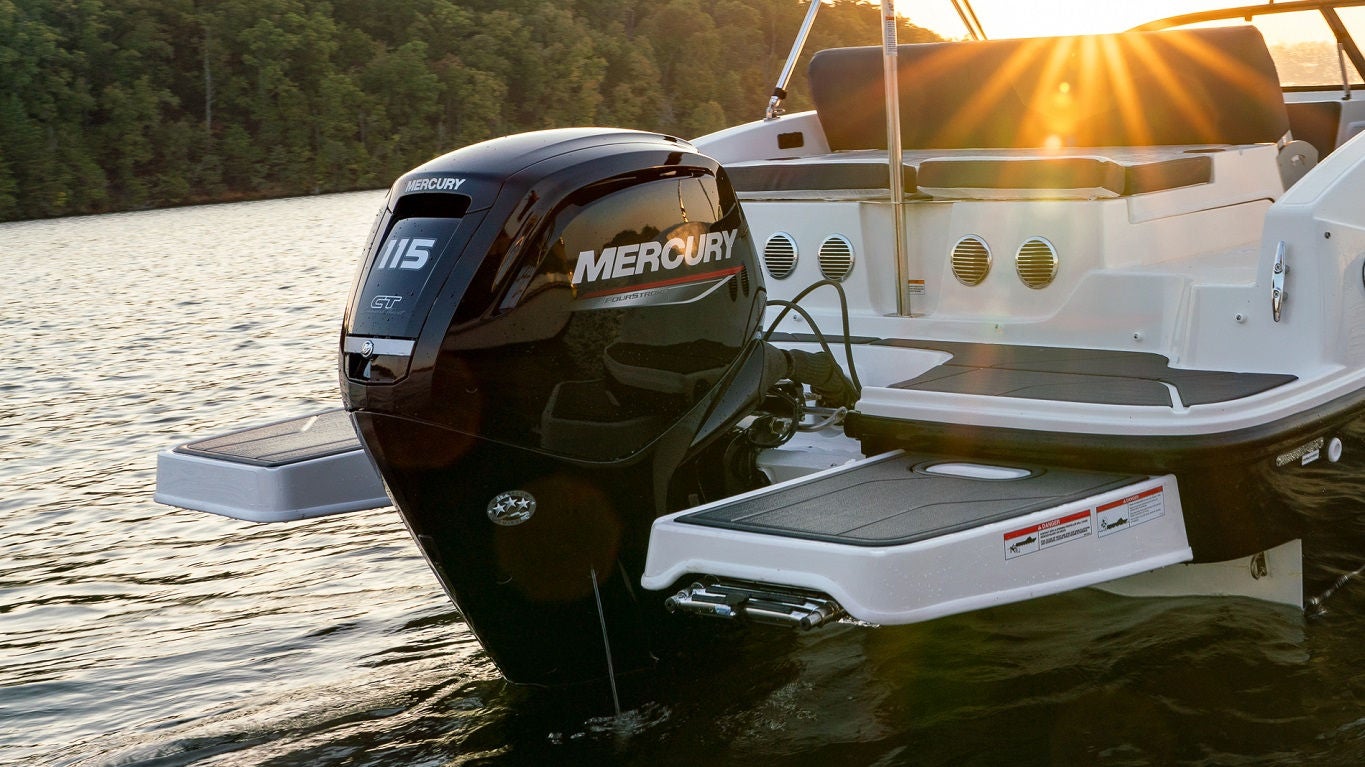
This is especially important if you go boating in saltwater, but is a good practice even after use in freshwater lakes and rivers. A 10-minute flush from your garden hose will wash away particulate matter, mineral deposits, and other contaminants, and help keep your engine’s cooling system clean and corrosion-free. Bayliner boats are factory-rigged with Mercury outboards, so watch this Flushing an Outboard Motor video from Mercury to see how it’s done.
Follow the manufacturer's recommended maintenance plan to a T
It’s absolutely critical to have the outboard’s powerhead and lower unit oils, filters, and spark plugs changed and/or inspected at the scheduled maintenance intervals. The water pump impeller also needs periodic inspection and eventually, replacement. Fortunately, your dealership can perform these tasks quickly, and in most cases, you won’t need to bring your boat in for service more than once a year. Specific maintenance schedules will vary from outboard to outboard, but generally call for service in yearly or 100-hour increments, whichever comes first. Since the average boater puts between 50 and 75 hours of operation on an engine annually, that means most of us can take the boat in for service once a year during the off-season to have that regularly scheduled maintenance performed.
On top of these critical outboard maintenance tips, you’ll also want to give that engine gentle washes and wax jobs, store it where it’s protected from the weather or keep it covered, and care for it as you would any major asset. Keep that outboard running strong and looking sharp, and you’ll be a happy boater until the day you sell it — which will hopefully be the day you buy your next Bayliner.
This website does not provide financial or legal advice. The information available on this website is provided for general informational and educational purposes only and is not a substitute for professional advice. You should consult with the appropriate professionals prior to making any financial decisions. YOUR USE OR RELIANCE ON ANY OF THE INFORMATION PROVIDED HEREIN IS SOLELY AT YOUR OWN RISK. UNDER NO CIRCUMSTANCE SHALL WE HAVE ANY LIABILITY TO YOU FOR ANY LOSS OR DAMAGE OF ANY KIND INCURRED AS A RESULT OF THE USE OR RELIANCE ON ANY INFORMATION PROVIDED.