

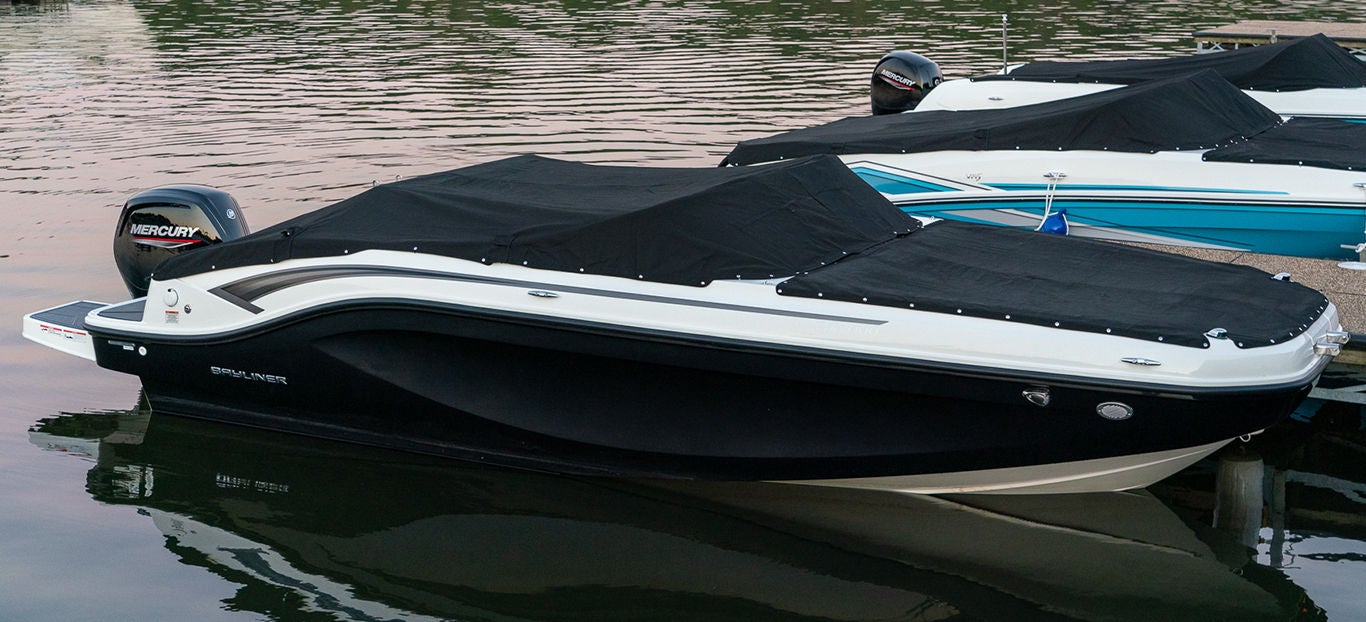
How to Care for & Clean Boat Canvas
The information provided is for general informational purposes only. This information is based on the author’s personal experience and does not constitute financial or legal advice. You should consult with a professional and/or conduct your own independent research to verify any information in this post prior to making a financial decision or otherwise.
The basics of marine canvas maintenance.
Caring for the canvas on your Bayliner will add years to the life of any cover as well as to the boat itself. Follow these steps, and you’ll be a canvas pro in no time.
1) Rinse
Wash down all parts of your covering’s structure with fresh water even if your trip was just an outing on fresh water. This removes dirt, sand and/or salt that can break down the canvas fibers or scratch the surface of the vinyl windows.
2) Dry
Wipe down the windows on your canvas structure to eliminate water spots. These will attract dirt that gets sticky and makes the spots nearly permanent. A basic microfiber cloth, rather than paper towels that can be abrasive, are recommended. Don’t dry clean or put any part of a canvas cover into a dryer; it can damage its UV inhibitors and ruin waterproofing.
3) Wash the Windows
After rinsing away any dirt with water, polish any clear vinyl windows with the manufacturer’s recommended cleaner and a soft cloth or microfiber mitt. Avoid cleaners with ammonia like Windex or citrus-based cleaners that can break down the vinyl’s plasticizers.
4) Mind the Details
Rinse zippers with plenty of water because dirt and salt get deep inside them. Dry the area and lubricate the teeth and pull with silicone spray. Work the zippers frequently, even on panels that rarely get opened. Similarly, make sure to rinse and dry any metal snaps to prevent rust. Don’t forget to lubricate snaps—SnapStick or even a bit of lip balm will do the trick.
6) Remove Stains
Tackle tough stains with a ¼ cup of non-chlorine bleach in a gallon of water or mild soap and a soft bristle brush. Don’t use traditional chlorine bleach on any of your covers or enclosure whether it’s white canvas or clear portions as it could actually damage the material and cause discoloration.
7) Store Properly
Do: Do dry all canvas before storing it. In most cases canvas may be rolled loosely for storage and stored in a well ventilated place.
Don’t: Don’t stack or fold canvas if it’s wet or dirty because that will invite mold and mildew and the accompanying smell.
8) Limit UV Exposure
Manage the amount of UV light exposure your canvas gets so that inevitable sun-bleaching happens evenly; it’s a good idea to alternate the parking direction in the slip or on the trailer so one side doesn’t get more sun than the other. If you trailer your boat home after every outing, then storing your canvas indoors will keep it looking pristine for longer.
Know when it’s time to repair or replace your boat’s canvas enclosure.
Don’t wait for a small tear to become a big problem. If you see that your canvas is weathered or chaffed to the point where it no longer functions, it’s time to replace it or patch that section.
DIY boat care can seem intimidating, but when you’re armed with checklists like the one above, you can take on boat ownership with confidence. These basic canvas care tips are just a part of boat detailing for beginners, but they’ll save you money and let you get more joy out of boating over time.
This website does not provide financial or legal advice. The information available on this website is provided for general informational and educational purposes only and is not a substitute for professional advice. You should consult with the appropriate professionals prior to making any financial decisions. YOUR USE OR RELIANCE ON ANY OF THE INFORMATION PROVIDED HEREIN IS SOLELY AT YOUR OWN RISK. UNDER NO CIRCUMSTANCE SHALL WE HAVE ANY LIABILITY TO YOU FOR ANY LOSS OR DAMAGE OF ANY KIND INCURRED AS A RESULT OF THE USE OR RELIANCE ON ANY INFORMATION PROVIDED.