

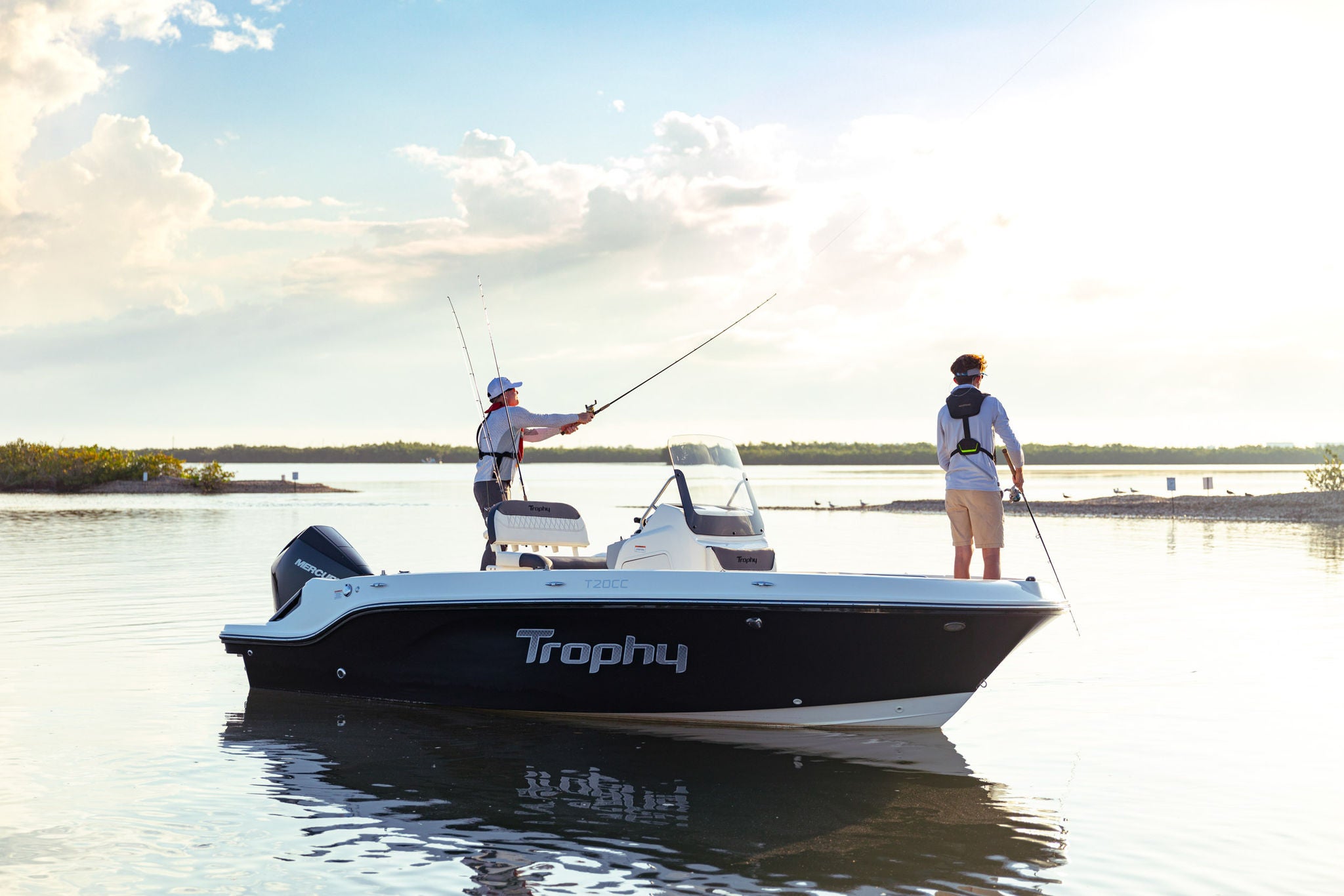
Bay Boat Buyer's Guide: Best Fishing Features
The information provided is for general informational purposes only. This information is based on the author’s personal experience and does not constitute financial or legal advice. You should consult with a professional and/or conduct your own independent research to verify any information in this post prior to making a financial decision or otherwise.
That moment before sunrise when the bay is flat, the trolling motor is humming, and you’re about to make your first cast. That’s when you find out whether you bought the best bay boat.
A bay boat isn’t just a “smaller center console.” It’s a purpose-built tool for inshore water shallow enough for skinny flats, strong enough to cross a choppy bay, stable enough for two anglers working the same side without doing the awkward boat dance.
If you’re shopping for a new bay boat, here’s what actually matters.
1. Hull Design & Draft: How Shallow Can You Really Go?
This is the backbone of the boat.
Bay boats are known for their shallow draft, usually in the 12–18 inch range. But don’t stop at the number. Ask:
- How does the hull handle chop when the wind kicks up?
- Is it a modified V, stepped hull, or pad hull?
- Does it stay stable when two anglers move to one side?
What to look for:
- Draft under 15–16 inches if you fish true skinny water
- A hull that balances shallow access with enough deadrise to handle open bay chop
- Clean water flow to the prop (important for hole shot and efficiency)
A boat that drafts shallow but pounds your knees in light chop isn’t doing you any favors.
2. Deck Layout: Space to Fish, Not Just Stand
Clutter kills fishability.
Step on the front deck. Is it wide enough for two anglers? Can you move from bow to stern without stepping over things? Are the cleats flush?
Look for:
- Large, elevated casting decks (bow and sometimes stern)
- Non-slip, easy-to-clean surfaces
- Flush-mount hardware
- Smart rod storage (lockable and long enough for modern rods)
If you can’t picture where your tackle bag goes without it being in the way, that’s a red flag.
3. Livewells & Fish Boxes: Built for Real Fishing
Marketing photos show fish. Real fishing needs systems.
Livewell essentials:
- Aeration and recirculation
- Rounded corners (bait doesn’t pile up and die)
- Easy access from casting position
- At least 20–30 gallons for serious bait anglers
Livewells:
- Insulated
- Proper drainage
- Big enough for the species you target (redfish vs. snook vs. tournament trout)
Open them. Close them. Check the seals. Cheap lids flex.
4. Power & Performance: Not Just Top Speed
Most bay boats run outboards between 150–300 HP. Don’t just ask, “How fast?” Ask:
- What’s the cruising efficiency?
- How quickly does it plane?
- Does it stay level when accelerating?
A strong hole shot matters when you’re running shallow and need to get on plane quickly.
What to prioritize:
- Reliable outboard brand with local service support
- Hydraulic steering
- Digital throttle and shift if available
- Proper horsepower rating, don’t underpower to save money
Underpowered boats feel sluggish when loaded with fuel, gear, and friends.
5. Electronics & Rigging: Future-Proof It
Modern inshore anglers rely on tech. If the helm looks cramped now, it’ll feel worse after your upgrade.
Check for:
- Space for dual 9–12” displays
- Clean wiring access
- Dedicated mounting for transducers
- Trolling motor compatibility (and reinforced bow mount)
If you fish seriously, assume you’ll upgrade electronics within three years. Buy the layout that can handle it.
6. Storage: Think Like a Tournament Angler
You can never have too much dry storage.
Open every compartment. Ask:
- Is it guttered?
- Does it drain properly?
- Are the hinges stainless?
- Can you access batteries easily?
You want:
- Dedicated tackle storage
- Separate anchor locker
- Clean battery compartment with room to expand
- Under-gunnel rod racks
A clean storage layout saves time and keeps gear from getting destroyed.
7. Ride Quality & Stability
Take a demo ride. Not a five-minute idle. Run it.
Pay attention to:
- How it lands in light chop
- Whether it tracks straight at low speeds
- How stable it feels when someone walks to the bow
Bay boats should feel planted. If it rocks excessively when one person shifts weight, that’s not ideal for sight fishing.
8. Build Quality: Look Past the Brochure
Crawl around the boat.
Tap on the deck.
Check the bilge finish.
Look at wiring runs.
Inspect hatch alignment.
You’re looking for:
- Clean fiberglass work
- Stainless hardware
- Secure wiring
- No exposed foam or rough edges
Quality shows in the small details most people skip.
9. Comfort & Practical Add-Ons
Even hardcore anglers appreciate comfort.
Consider:
- Leaning post vs. flip-up seating
- Removable backrests
- Spray protection
- Shade options
- Freshwater washdown
If you fish long days, small comfort upgrades matter.
10. Resale Value & Brand Support
Some bay boats hold value better than others.
Research:
- Brand reputation
- Warranty coverage
- Dealer network strength
- Used market pricing
A well-supported brand with a strong dealer network protects your investment long-term.
11. Matching the Boat to Your Style
Not all bay boats are the same.
Ask yourself:
- Are you primarily sight fishing shallow flats?
- Running big open bays?
- Fishing tournaments?
- Taking family along occasionally?
Some bay boats lean minimalist and fish-first. Others blend fishability with family comfort.
Be honest about how you’ll use it 80% of the time.
Quick Bay Boat Feature Checklist
✔ Shallow draft (12–16”)
✔ Stable hull with chop capability
✔ Wide casting decks
✔ Proper livewell system
✔ Adequate horsepower
✔ Electronics-ready helm
✔ Smart, dry storage
✔ Clean build quality
✔ Strong warranty & resale
When It's Time to Cast
The best bay boat isn’t the one with the biggest engine or the flashiest upholstery. It’s the one that disappears beneath you when you’re fishing.
You shouldn’t be thinking about balance. Or storage. Or whether your bait is dying.
You should be watching the water.
Buy the boat that lets you focus on that moment when the tide shifts, the bait moves, and you know the next cast might be the one.
To learn more read our bay boats FAQ, and vis the model page for our T18 center console boat for inshore fishing.
This website does not provide financial or legal advice. The information available on this website is provided for general informational and educational purposes only and is not a substitute for professional advice. You should consult with the appropriate professionals prior to making any financial decisions. YOUR USE OR RELIANCE ON ANY OF THE INFORMATION PROVIDED HEREIN IS SOLELY AT YOUR OWN RISK. UNDER NO CIRCUMSTANCE SHALL WE HAVE ANY LIABILITY TO YOU FOR ANY LOSS OR DAMAGE OF ANY KIND INCURRED AS A RESULT OF THE USE OR RELIANCE ON ANY INFORMATION PROVIDED.