

How to Maximize Your Boat’s Range
The information provided is for general informational purposes only. This information is based on the author’s personal experience and does not constitute financial or legal advice. You should consult with a professional and/or conduct your own independent research to verify any information in this post prior to making a financial decision or otherwise.
Consider these five tips to help extend your time on the water and potentially save money
Use Non-Ethanol Gas
Ethanol contains 30% less energy than gasoline so switching from 87-octane E10 gas (10% ethanol) to regular 87-octane gas will improve fuel economy by 3%, which will increase your boat’s range. However, if the goal is to save money, stick with E10 because pure gas can cost up to $1 more per gallon; maximizing boat fuel efficiency on a boat will also help you go longer between fuel-ups.
Get on Plane Quickly
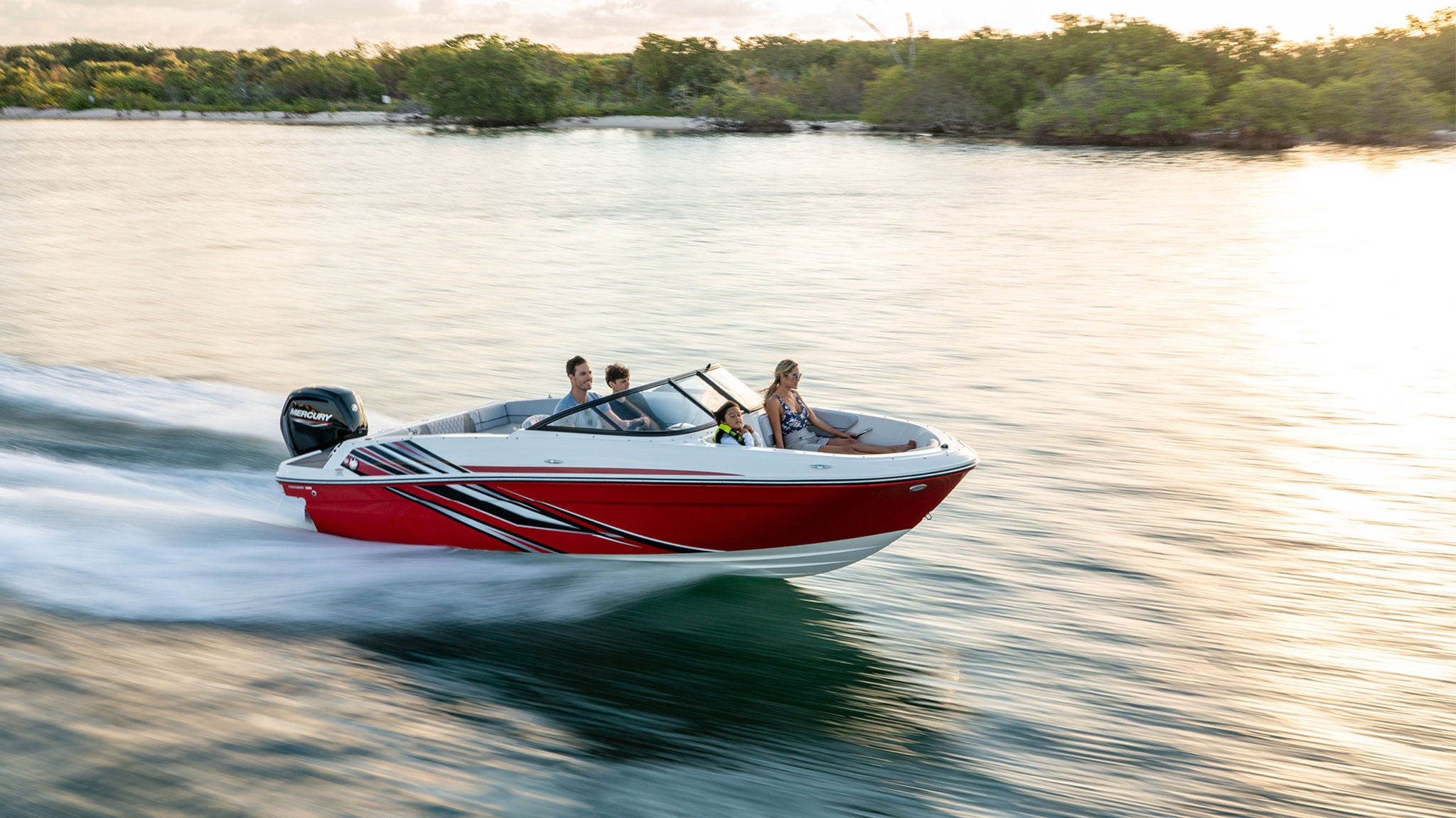
Planing is the point where your boat begins to ride over the water vs. cutting through it. Sometimes, new boaters think easing their boats on plane is easier on the engine. Unfortunately, the opposite is true—the longer it takes for a boat to get on plane, the harder the motor has to work.
The most fuel-efficient boat launch technique is to first make sure the engine is trimmed all the way down by pressing the lower button on the shift/throttle lever and holding it for a few seconds. Next, quickly advance the throttle all the way (after bracing your passengers) until the boat reaches the desired speed then smoothly back off the throttle.
Learn to Trim the Boat Properly
Once on plane, trimming the boat’s engine up raises the bow and reduces the drag of the hull, which not only increases fuel economy but also reduces the load on your motor. How do you know when it’s trimmed up the correct amount? Watch the speedometer and incrementally press the upper button on the shift/throttle lever and you’ll see the speed climb.
If the speed starts dropping, then you’ve trimmed it too far, so give the down button a couple of bumps until the speed reaches its highest level, and then it’s set at its optimum level. Should the waves kick up, trimming the motor down a little might reduce fuel economy but the boat will ride more smoothly.
Find Your Boat’s Most Economical Speeds
Typically, there are two speeds that yield the best mileage: at idle and when the boat is at the slowest speed while being comfortably on plane. A great source for outboard motor performance data, including boat fuel economy information, is Mercury’s Boat House Bulletins. There, you’ll find the data gleaned during performance tests conducted by Mercury technicians on hundreds of boats like the Bayliner Element E21 powered by a Mercury 150-hp outboard.
Get VesselView Mobile
To get real-time information on exactly what mileage your boat is achieving, you can add a device called VesselView Mobile. It attaches directly to Mercury motors, 2004 and newer that are at least 40 horsepower, and wirelessly transmits the engine’s computer information to a smartphone or SmartCraft-compatible display, which will help your boat achieve its best boating range.
Not only will VesselView Mobile give current mpg, but it will also show how far your boat can travel on its current fuel load and how much cruising time is left at that speed. In addition, it will provide a wealth of information about engine performance, service needs and will give engine alerts just to name a few of its functions..
This website does not provide financial or legal advice. The information available on this website is provided for general informational and educational purposes only and is not a substitute for professional advice. You should consult with the appropriate professionals prior to making any financial decisions. YOUR USE OR RELIANCE ON ANY OF THE INFORMATION PROVIDED HEREIN IS SOLELY AT YOUR OWN RISK. UNDER NO CIRCUMSTANCE SHALL WE HAVE ANY LIABILITY TO YOU FOR ANY LOSS OR DAMAGE OF ANY KIND INCURRED AS A RESULT OF THE USE OR RELIANCE ON ANY INFORMATION PROVIDED.